No tariffs or extra fees on US orders. ORDER NOW

No products in the cart.

4cs

The 4Cs are the global standard

GIA’s 4Cs transformed the way diamond quality is determined and communicated, forever changing how diamonds are evaluated, bought and sold.

The 4Cs are for everyone. This framework is both a way to better understand your diamond, and to ensure accuracy in the evaluation of your diamond’s unique characteristics.

It is the best way to ensure clear information, uniform practices, scientific grading and transparent evaluation in the global diamond industry. The 4Cs are one of GIA’s many innovative contributions and one we are incredibly proud of because of how many consumers it continues to help.

With the strictest dedication to these standards, we deliver objective, consistent diamond grading results at all our laboratories around the world. While our language has been adopted worldwide, the only way to ensure you are receiving the strictest application of these standards is through the proprietary equipment and tried and tested procedures of an official GIA laboratory.

The 4Cs are the defining characteristics of every diamond.

GIA’s diamond grading provides the consistent and unbiased results that the global diamond industry and diamond customers trust.

Without strict standards, the characteristics, quality and value of a diamond would be left open to interpretation.

Choosing a diamond may be a matter of preference, but evaluating a diamond is a matter of precision.

That’s where we come in.

Diamond Color Grading

Viewed in a standardized environment, every diamond’s color is graded against masterstones Multiple GIA graders independently evaluate each diamond and use our proprietary grading technology. The grade is not determined until there is consensus, and additional graders may be brought in until a determination can be made.

Diamond Clarity Grading

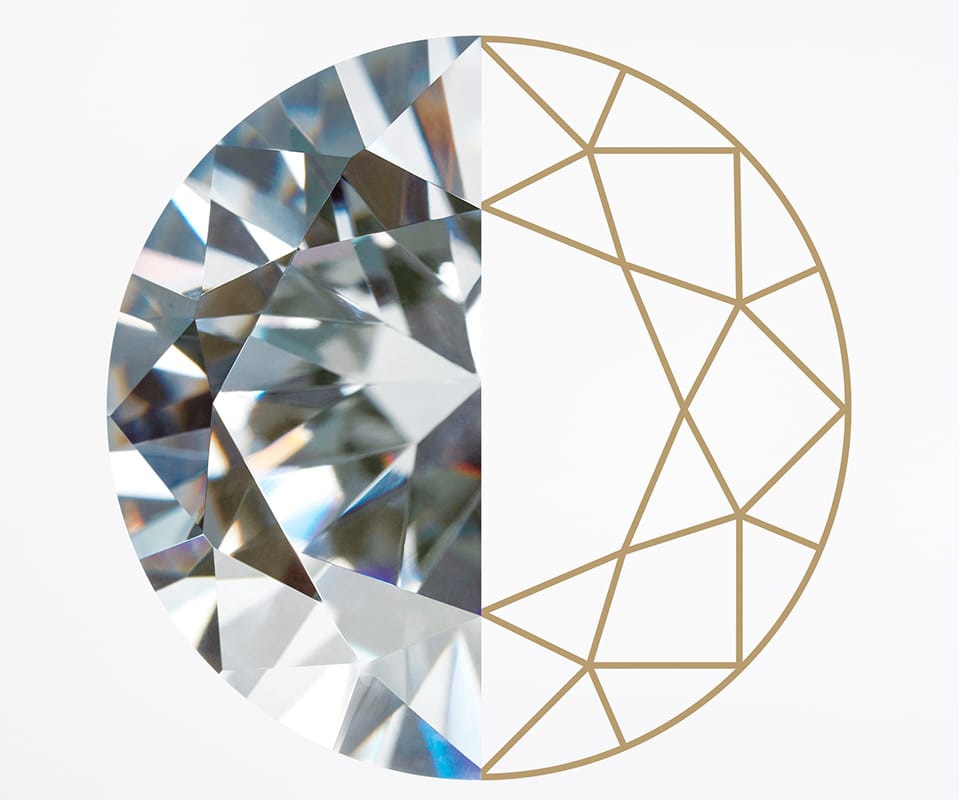
Viewed with 10x magnification under standard conditions, multiple graders independently evaluate each diamond. First addressing any clarity enhancements or surface coatings, they document the diamond’s clarity, polish, and symmetry, while plotting the clarity characteristics on the diagram most representative of the diamond’s shape and faceting style.

Diamond Cut Grading

Viewed using the GIA Cut Grading System, a proprietary computerized system designed to develop mathematical measurements, or metrics, to predict light performance based on more than 1 million modeled proportion sets to explore these components, followed by more than 70,000 human observations for nearly 2300 diamonds to validate and fine tune the metrics.

Before clarity there was chaos

Weighed using the highest precision digital micro-balance available, every diamond is evaluated to the fifth decimal place, to the nearest hundred-thousandth of a carat to ensure accuracy, and then reported to the hundredths place.

FAQs

The 4Cs (Cut, Color, Clarity, and Carat weight) are the global standards for judging the quality of a diamond. Established by the GIA, these four factors determine a diamond’s beauty, rarity, and price. Understanding those helps you balance your budget with the look you want.

Most experts agree that Cut is the most important C. A diamond with perfect color and clarity will still look dull if it is poorly cut. A high-quality cut ensures the stone reflects light beautifully, giving it that iconic sparkle and “fire.”

Not exactly. Carat refers to the weight of the diamond, not its physical dimensions. While a higher carat weight usually means a larger stone, two diamonds of the same weight can look different in size depending on their shape and how they are cut.

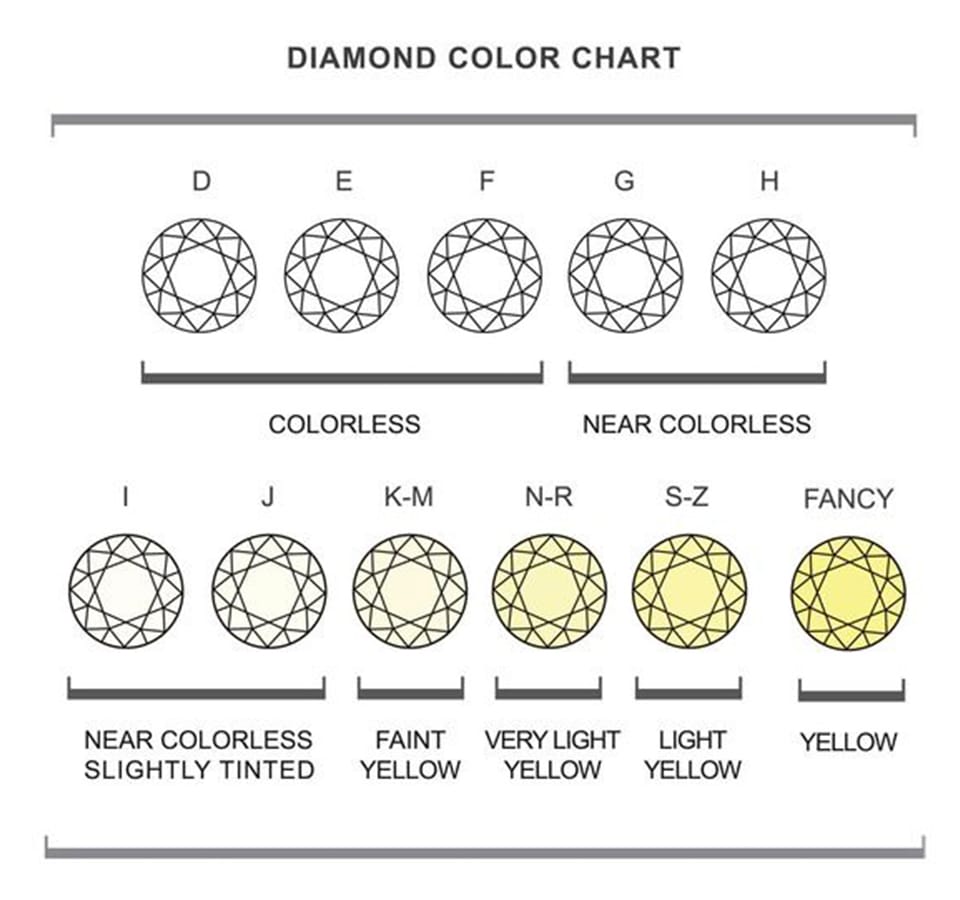
The GIA color scale ranges from D (Colorless) to Z (Light Yellow/Brown).

  • D-F: Colorless (the most expensive).
  • G-J: Near Colorless (looks white to the naked eye, offers the best value).
  • K-M: Faint tint. If you are setting your diamond in yellow or rose gold, you can often choose a lower color grade (like J or K) because the metal’s warmth hides the slight tint of the stone.

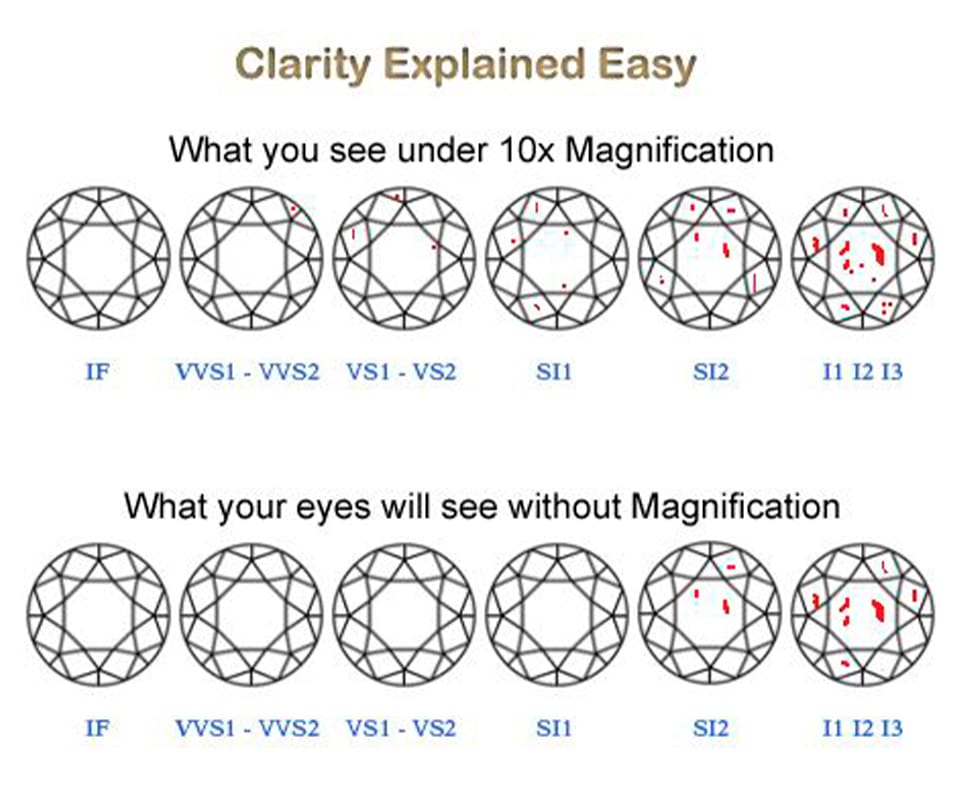
Clarity measures the tiny “birthmarks” inside a diamond called inclusions or on its surface called blemishes.

  • FL/IF: Flawless (extremely rare).
  • VS1/VS2: Very Slightly Included (inclusions are invisible to the naked eye).
  • SI1/SI2: Slightly Included (best for budget-conscious buyers; usually “eye-clean”). For the best value, look for an “eye-clean” stone—one where you can’t see any marks without a microscope.

Yes. Lab-grown diamonds are real diamonds, so they are graded on the exact same 4Cs scale as mined diamonds. When you buy a lab diamond, you will receive a grading report (like from IGI or GIA) that lists its specific Cut, Color, Clarity, and Carat weight.